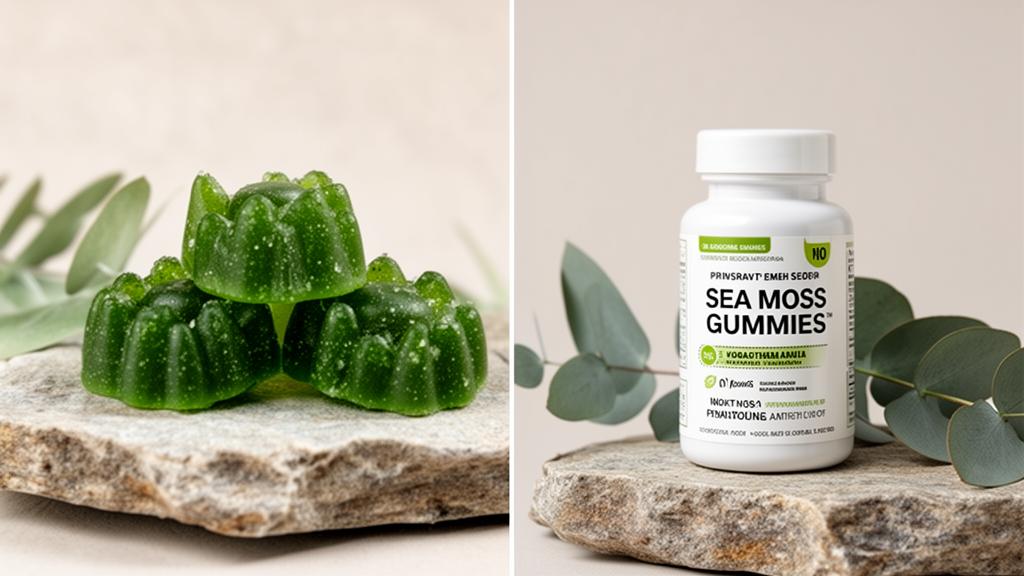
Sea Moss vs Multivitamin: Which One Should You Take?
By Flexies Team
Sea moss has earned the nickname 'nature's multivitamin' because it contains over 90 minerals and trace elements. But does that mean it can actually replace your daily multi? Or are they two different things entirely?
The answer is a bit nuanced, so let's break down what each one offers and where they overlap.
What a traditional multivitamin gives you
A standard multivitamin typically contains set doses of vitamins A through K, plus minerals like iron, zinc, and magnesium. They're designed to cover basic nutritional gaps in a general way.
The upside is predictability. You know exactly what you're getting in each dose. The downside is that many multivitamins use synthetic forms of vitamins that your body may not absorb as efficiently as whole-food sources.
What sea moss brings to the table
Sea moss (Irish moss) is a type of red algae that naturally contains a wide spectrum of minerals including iodine, potassium, calcium, magnesium, zinc, and iron, along with B vitamins and vitamin C.
The key difference is that these nutrients come in their natural, whole-food form. Your body tends to recognise and absorb whole-food nutrients more efficiently than isolated synthetic versions.
Sea moss also provides something most multivitamins don't: prebiotic fibre that supports gut health, and natural compounds that support thyroid function through its iodine content.
Where sea moss has the edge
Sea moss provides minerals in a bioavailable, whole-food matrix, meaning your body doesn't have to work as hard to use them. It also offers thyroid support through natural iodine, gut support through its prebiotic fibre, and skin hydration benefits.
Our Vita Sea Moss Gummies combine sea moss with bladderwrack and burdock root to round out the formula. Bladderwrack adds additional iodine and antioxidants, while burdock root supports detoxification and skin health.
That combination gives you a broader wellness benefit than most multivitamins can offer in a single product.
Where a multivitamin might still make sense
If you have a diagnosed deficiency in a specific vitamin (like vitamin D or B12), a targeted supplement or multivitamin with standardised doses might be more appropriate. Sea moss contains these nutrients but not always in therapeutic doses for correcting a deficiency.
Multivitamins also tend to include nutrients that sea moss doesn't provide in significant amounts, like vitamin E and certain B vitamins at higher doses.
Can you take both?
You can, but for most people it's not necessary. If you eat a reasonably balanced diet, sea moss can cover many of the same bases as a multivitamin while offering additional gut and thyroid benefits.
If you're going to pick one, sea moss is the more interesting choice because it does more than just fill vitamin gaps. It supports multiple body systems in a way that a standard multi simply doesn't.
pairs well with
Frequently Asked Questions
Can sea moss replace my multivitamin?
For many people, yes. Sea moss provides over 90 minerals and trace elements in a whole-food form.
However, if you have a specific diagnosed deficiency, a targeted supplement may still be needed.
Is sea moss safe to take every day?
Yes. Sea moss has been consumed as a food for centuries. As with any supplement, stick to the recommended daily dose.
Does sea moss help with energy?
Sea moss contains iron, B vitamins, and iodine (which supports thyroid function), all of which play a role in energy production.
Many people report improved energy with consistent use.
Related Reading

Sea Moss Benefits for Women: What's the Hype About?
Sea moss went from Caribbean kitchen staple to wellness superstar. But does it live up to the hype? Here's what women should know.

The Best Supplements for Glowing Skin in 2026
Skincare routines are great, but glowing skin starts from within. Here are the supplements that actually make a difference.